-
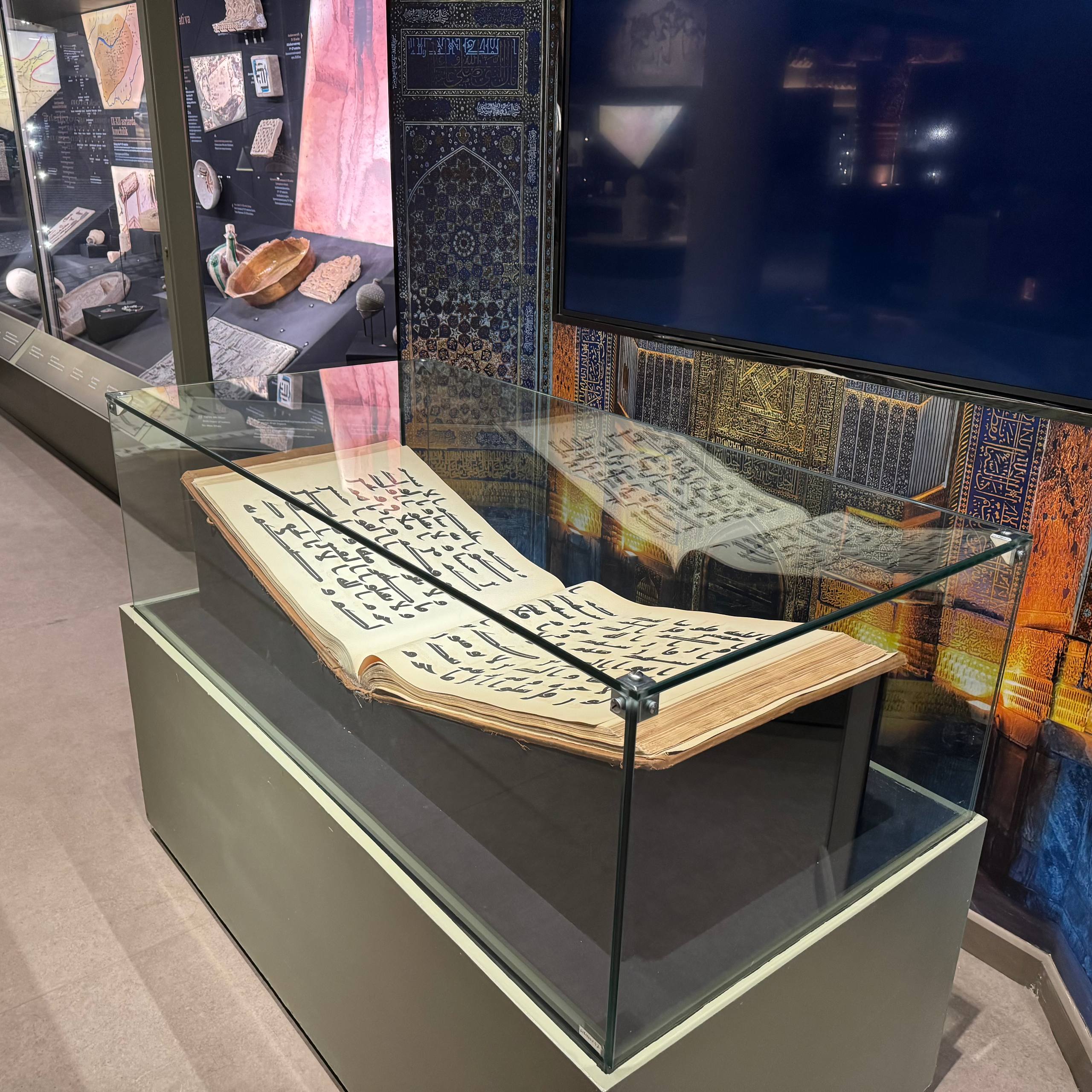
The territory of Uzbekistan has long been an important center connecting East and West. This land was famous for its natural wealth, fertile soil, and people’s aspiration for knowledge and learning.
Starting from the 650s, Arab armies began invading Central Asian states such as Sogdiana, Bactria, Khorezm, and Fergana. By the first half of the 8th century, these territories had been conquered and incorporated into the Arab Caliphate under the name Mawarannahr. Across the region, popular uprisings against Arab rule broke out. The leaders of these revolts—Abu Muslim, al-Muqanna, and Rafi ibn Layth—left a significant mark in history as symbols of the people’s struggle for independence and freedom. However, the conquest brought not only military change but also cultural and religious transformation. Over time, Islam was embraced by the population as a unifying faith and gradually merged with local traditions. The Arabic script was introduced, while indigenous writing systems slowly lost their importance. Islamic values and sciences such as fiqh (Islamic jurisprudence) and hadith studies (the science of authenticating the Prophet Muhammad’s sayings and actions) began to flourish.
By the early 9th century, the power of the Caliphate had weakened. During this period, independent local dynasties rose in Central Asia, the most prominent being the Samanid dynasty, founded by Ismail Samani. The capital of this state was Bukhara, which became a major center of science and culture.
As early as 809 CE, the Bayt al-Hikma (House of Wisdom) was founded in Baghdad, the capital of the Caliphate. Scholars from Central Asia, including Muhammad al-Khwarizmi from Khorezm and Ahmad al-Fergani from Fergana, played a key role in its activities. They made enormous contributions to science—founding an observatory and a unique library in Baghdad. Ancient Greek, Indian, and Persian works were translated into Arabic, helping to spread knowledge on a global scale.
Later, in 1004, another academy was established in Gurganj (Khorezm)—the Dar al-Hikma wa al-Ma’arif—under the Khwarazmshah Mamun. It was headed by the scholar Abu Rayhan al-Biruni from the city of Kath (now Beruni). The academy conducted research in multiple scientific fields and translation work; polymath scholars worked there, and significant discoveries were made.
The exhibition presents portraits and works of the great scholars:
Thus, between the 9th and 12th centuries, the territory of ancient Uzbekistan became one of the leading centers of science and enlightenment in the Muslim world. The works of its scholars profoundly influenced the development of science not only in the East but also in Europe. It is for this reason that this era is often referred to as the “First Renaissance.”
During the Samanid period and the rule of subsequent local dynasties, in addition to scientific advancement, major economic and cultural centers such as Samarkand, Bukhara, Urgench, and Merv flourished. Urban development thrived, and the exhibition features models of the Ismail Samani Mausoleum, the Kalyan Minaret in Bukhara, and information about the unique architectural monuments of that time—mosques, madrasas, caravanserais, and others.
Irrigated agriculture expanded through artificial watering systems. Various crafts developed, including ceramics, jewelry making, metal casting, copper engraving, weaving, and glassmaking—their products are displayed in the museum halls. Trade flourished, and bazaars became vibrant centers of social life.
The 7th–12th centuries thus represent a distinct historical stage in the development of the territory of ancient Uzbekistan. The era of the First Renaissance stands today as an invaluable contribution to world civilization. The Uzbek people take pride in the scientific and spiritual legacy of their ancestors, carefully preserving and passing it on to future generations.